
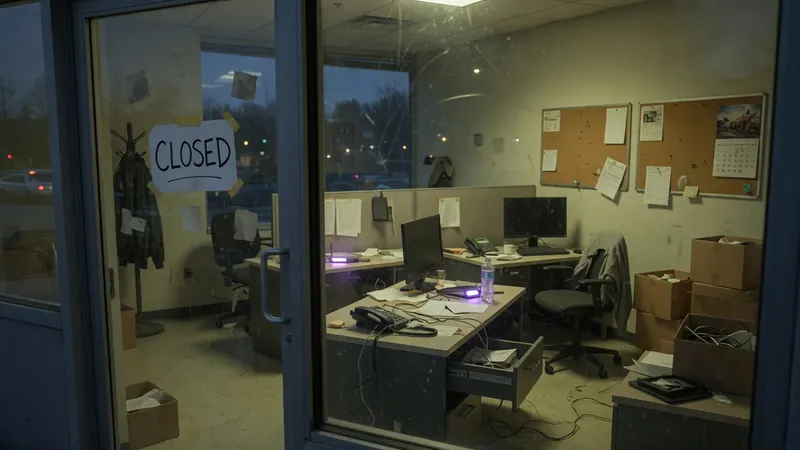
Brazil's federal betting ban has already forced KTO, a licensed operator active only in Brazil, to close. NEXT.io reported the shutdown on 12 October, within three weeks of Provisional Measure 1.394/2026 banning online betting; former employees said more than 200 staff were let go on 8 October. A separate MercoPress analysis argues that compliance itself has become the cost of entry across Latin America, meaning operators that rely on a single market can be wiped out by one regulatory change.
KTO shuts down in its only market
KTO was set up in Malta in 2018 and began operating in Brazil the following year. In August 2024 it withdrew from Peru and Chile to concentrate solely on Brazil's regulated market, with chief executive Andreas Bardun saying the strategy was to operate only in jurisdictions with full regulation. When Brazil's federal market opened on 1 January 2025, KTO was one of the first 14 companies to obtain a full licence from the betting authority, the SPA. But under the ban, KTO's R$30 million licence has been cancelled and no refund will be made, NEXT.io reported, and its Brazilian consumer website now sends visitors to a government page. Anthony MacKay, KTO's head of affiliates, wrote on LinkedIn that 'the recent developments in Brazil have unfortunately led KTO Group to closing down its doors.' The company did not reply to a request for comment.
Single-market exposure and job losses
KTO had no other market to fall back on. Industry estimates from Blask put its 2025 gross gaming revenue at about US$54 million, although the company does not publish results. The layoffs are part of wider job losses exceeding 3,500 in Brazil's betting sector since President Luiz Inácio Lula da Silva signed the measure on 25 September. Bardun told NEXT.io there were 'a lot' of redundancies but some staff would remain, and that the licence was still valid until at least 25 October under the provisional measure. Multi-market groups also saw their share prices drop after the announcement, but they could still generate revenue elsewhere.
Advertising scrutiny preceded the ban
Three months before the ban, KTO was among three betting brands supporting CazéTV's YouTube coverage of all 104 World Cup matches, together with bet365 and Betnacional. The tournament sponsorship raised roughly R$2 billion, and reports put each master package at around R$185 million, though KTO's own outlay was not disclosed. At its peak the channel had 21 million simultaneous devices for Brazil v Japan and 24.2 million for the France v Spain semi-final, with more than 2.5 billion views overall. On 24 June, consumer protection secretariat Senacon opened a preliminary investigation into betting ads on the broadcasts, including a KTO promotion. The advertising self-regulator Conar recommended suspending those ads two days later, and on 30 June the SPA imposed a precautionary suspension and began administrative proceedings, saying the advertising created pressure to bet and used warning text that was too small. Potential fines reached as high as R$2 billion, with possible licence suspension, but no result had been published before the ban came into force.
Compliance costs rise across Brazil
MercoPress said federal tax payments by Brazil's regulated betting and gaming industry reached R$8.75 billion from January to July 2026, up almost 77 per cent on the same months of 2025. A federal licence costs R$30 million, covers as many as three brands for five years, and requires the .bet.br domain. Operators must check each player's CPF and facial identity, and gambling on credit is not allowed. Complementary Law 224/2025 increased the gross gaming revenue levy from 12 per cent to 13 per cent for 2026, with scheduled rises to 14 per cent in 2027 and 15 per cent in 2028. MercoPress added that entry fees, tax increases and separate certification rules make regional expansion depend more on using one technology base to satisfy several regulators than on marketing spend.
Fragmented rules in Peru, Chile and Argentina
Peru chose licensing earlier. Law 31557 took effect on 9 February 2024, and within 30 days MINCETUR had received 145 operator applications and 184 platform or game-type approval requests. Operators pay 12 per cent on monthly net income. Chile has no online licensing framework. The Supreme Court decided by three votes to two that online gambling is illegal unless expressly authorised, and told telecoms such as Claro, Entel, Movistar and WOM to block unlicensed sites. The Superintendency of Casinos estimates more than 900 illegal betting sites take in around US$150 million a year, and Subtel has ordered internet providers to block 42 sites. Argentina adds another layer: licences are issued by individual provinces and the City of Buenos Aires rather than nationally, so an operator active in several jurisdictions holds several permits with different reporting rules.
Legal challenges and 2027 pressures
Trade associations ANJL, IBJR (which KTO co-founded) and Anseja have challenged MP 1.394/2026 at Brazil's Supreme Court. Congress now has 120 days to approve or reject the measure. Some operators are fighting on their own; Stake briefly won an injunction to keep operating, but a federal appeals court has since suspended it. Licensed operators have until 15 December to settle remaining obligations with the SPA. Looking to 2027, MercoPress identifies three main pressures: Brazil's GGR tax rise to 14 per cent will squeeze mid-sized operators carrying the R$30 million licence; infrastructure-level enforcement such as domain blocking in Chile and Brazil makes unlicensed operation more expensive; and a possible Chile Senate bill could open another major market with its own technical and tax requirements.